
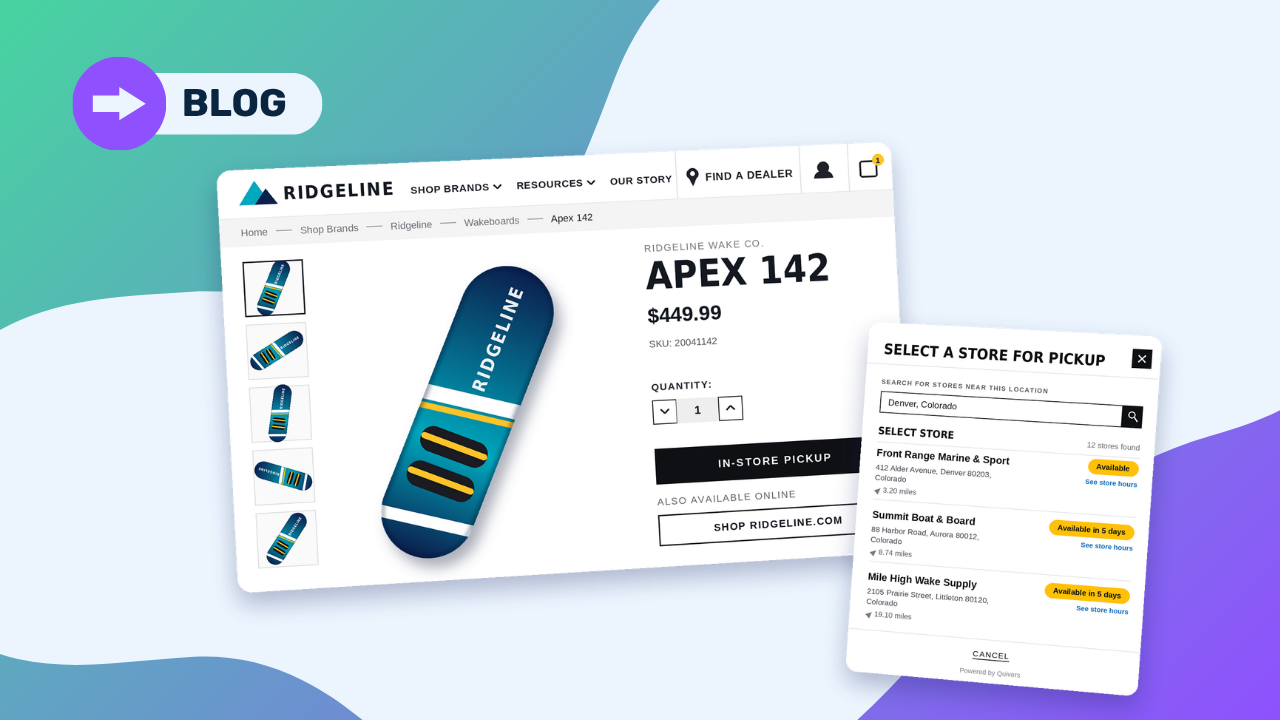
Selecting the right dealer inventory ecommerce software is one of the most consequential decisions ecommerce and omnichannel leaders make. Get it right, and a shopper who hits a sold-out size on your site still buys it today, from a dealer down the road. Get it wrong, and that shopper leaves for a competitor, a marketplace, or nowhere at all - a sale you already generated and never recovered. Quivers connects brands, retailers, and distributors so that demand finds a dealer with the right product in stock.
Before you sign a contract or commit engineering resources, you need to know exactly what to ask. The questions below will help you separate platforms built for dealer-first commerce from those that treat retail partners as an afterthought - the same gap we broke down in 9 dealer relationship management tools for ecommerce brands.
Key Takeaways: Dealer Inventory Ecommerce Software
- Prioritize software that delivers real-time, SKU-level inventory visibility and multichannel inventory synchronization across your entire dealer network automatically.
- Evaluate whether the platform supports multiple fulfillment methods including buy online, pick up in store, ship-from-store, and ship-to-store options.
- Confirm that order routing rules can be customized based on proximity, inventory levels, and retailer participation.
- Ask about integration timelines and whether implementation requires significant engineering resources or platform changes.
- Quivers unifies dealer inventory with ecommerce in under 20 minutes, with zero developer effort required.
Essential Questions for Evaluating Dealer Inventory Ecommerce Platforms
1. Does the Platform Offer Real-Time Inventory Visibility?
Your ecommerce store needs to reflect what your dealers have on their shelves right now. Ask whether the software pulls live inventory data by product and variant, not just daily batch updates. Static or delayed inventory creates stockout confusion and erodes customer trust.
The answer you want: inventory status syncs automatically through POS integrations and updates in real time, so a shopper never sees a false "in stock" or a false "sold out" on a product you could have sold.
2. How Does the System Handle Order Routing?
Intelligent order routing determines which dealer fulfills each order based on configurable rules. You need to understand whether routing considers proximity, stocking levels, dealer performance, and retailer participation preferences.
A platform that routes orders to the closest stocking dealer reduces shipping costs and delivery times while keeping your retail partners actively engaged.
3. What Fulfillment Options Does It Support?
Modern consumers expect choices. Ask whether the software supports buy online, pick up in store, ship-from-store, ship-to-store, and curbside pickup. According to Digital Commerce 360's 2026 research, retailers offering buy online, pick up in store achieved conversion rates of 3.4%, compared to 2.9% average.
Flexible fulfillment turns your dealer network into a distributed fulfillment engine rather than a static list of wholesale accounts.
4. How Do Retailers Join and Participate?
Dealer participation determines the value of your entire network. Find out what the onboarding process looks like for retailers. Does the platform handle dealer invitations, training, and ongoing support? Or does your team carry that burden?
The ideal answer includes guided retailer onboarding with minimal friction and clear incentives for participation.
5. What Integration Options Exist for Your Ecommerce Platform?
Your brand likely runs on Shopify, BigCommerce, Magento, or a custom stack. Ask specifically which platforms the software supports and what the integration requires. Some solutions install in minutes; others demand weeks of development.
Prioritize platforms that work with your existing store without forcing a migration or major replatforming effort.
6. Does the Platform Surface Dealer Inventory on Product Pages?
A live dealer inventory locator on your product pages closes the gap between finding a product online and purchasing it from a local retailer. Ask whether shoppers can see exactly which nearby dealer has their specific product and variant in stock.
This feature recovers demand that would otherwise leave your site for good: the shopper still buys the product, just from a dealer with confirmed stock instead of walking away empty-handed. Most dealer locators only show pins on a map, not live stock - that gap is exactly what this question is designed to catch.
7. What Sell-Through Data Will You Receive?
Connecting dealer inventory to ecommerce should show you what your retail partners are actually selling, not just what you shipped them. Ask about sell-through analytics, store-level reporting, and demand signals that inform your forecasting and inventory allocation decisions.
Real-time sell-through data helps you identify which dealers move product, which markets have unmet demand, and where to focus next season - early-season signals alone often miss this.
8. How Does the System Prevent Overselling?
When multiple channels draw from the same inventory pool, overselling becomes a real risk. Ask how the platform prevents customers from purchasing products that are no longer available. Real-time inventory sync and automatic availability updates are the minimum standard.
You should also understand what happens when inventory changes mid-transaction and how the system handles edge cases.
9. What Does Implementation Actually Look Like?
Ask for specific timelines, resource requirements, and milestones. A platform that promises quick setup should be able to tell you exactly how long "quick" means. Understand whether you need developer involvement or whether business teams can handle the configuration.
The best platforms go live in days or weeks, not months. Quivers installs on existing stores in about 20 minutes.
10. How Does the Platform Measure Success?
Beyond implementation, you need to know how the software tracks performance. Ask about reporting dashboards, key metrics, and how you will measure return on investment. Look for reporting on recovered demand, dealer participation rates, and fulfillment performance.
Clear metrics allow you to prove value to stakeholders and continuously improve how your dealer network performs.
How to Choose the Right Dealer Inventory Ecommerce Platform
The questions above separate genuine dealer inventory management software from platforms that just add another integration layer without solving the core problem. Focus on real-time inventory data, flexible fulfillment options, and rapid implementation.
Quivers unifies brands, retailers, and distributors with real-time sell-through data and a high-performance engine built specifically for dealer-first commerce. With over 25,000 businesses on the platform and 300 million orders processed, Quivers delivers the infrastructure brands need to capture every sale.
Ready to see how Quivers can unify your dealer network with your ecommerce store? Get started today.
FAQs about Dealer Inventory Ecommerce Software
What is dealer inventory ecommerce software?
Dealer inventory ecommerce software connects a brand's online store with its network of independent retailers, displaying live dealer inventory and enabling orders to be fulfilled by local dealers rather than centralized warehouses.
Why is real-time inventory visibility important for brands with dealer networks?
Real-time inventory visibility prevents overselling and shows shoppers what is actually available. That transparency increases conversion rates and lets a sale complete at a dealer with confirmed stock, instead of being lost entirely.
How does Quivers handle order routing?
Quivers routes orders based on brand-specific rules including proximity, inventory levels, and retailer preferences. This ensures each order goes to the best-fit dealer for faster fulfillment and lower shipping costs.
What ecommerce platforms integrate with dealer inventory software?
Most dealer inventory platforms integrate with popular ecommerce systems. Quivers supports Shopify, BigCommerce, Magento, WooCommerce, and custom stacks, installing without requiring platform migration.
How long does implementation typically take?
Implementation timelines vary significantly between platforms. Some require months of development work, while Quivers goes live in under 20 minutes with zero engineering resources required.
What fulfillment options should dealer inventory software support?
Look for platforms supporting buy online, pick up in store, ship-from-store, ship-to-store, curbside pickup, and white-glove delivery. Multiple fulfillment options give customers choices while turning dealers into fulfillment partners.