
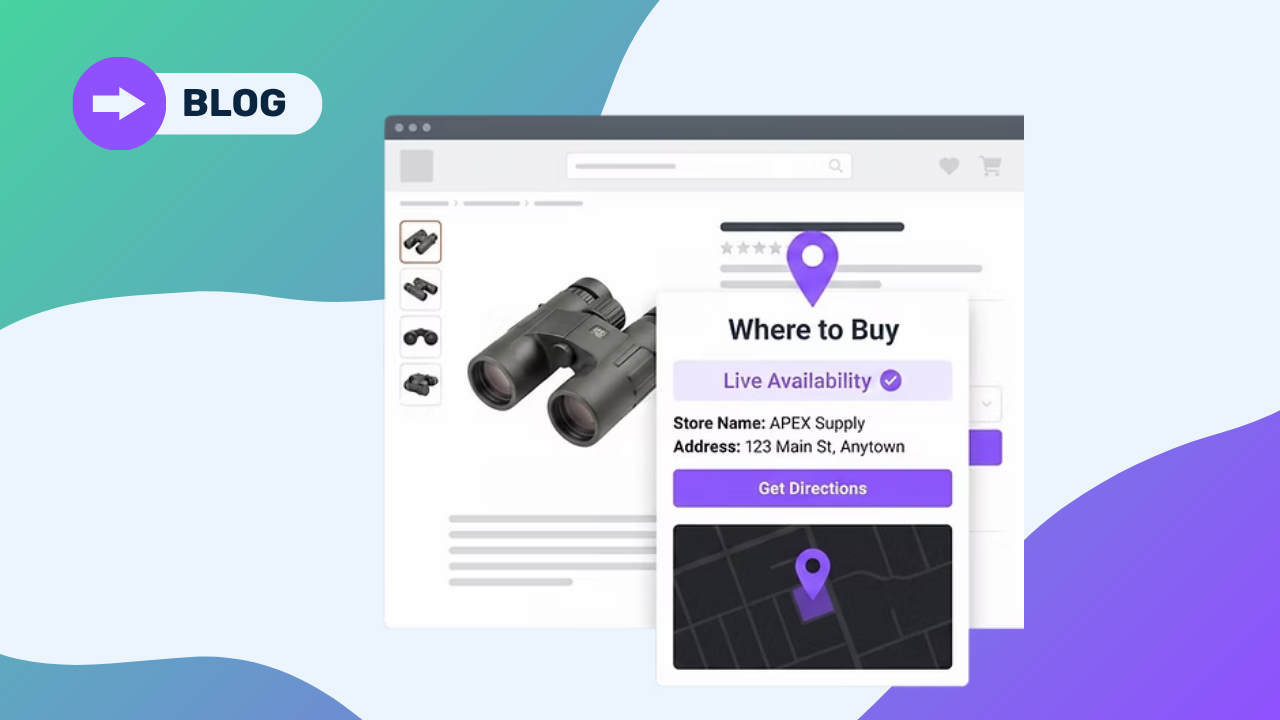
A shopper finds your product. They know they want to buy it from a dealer, not from you - maybe they need to try it on, hear it, or just prefer to walk out of a store with it in hand. They go looking for your dealer locator to find somewhere nearby that has it. What they find is a map with pins on it, or a list of store names and addresses. What they don't find is whether any of those stores actually have the product in stock, today.
So they close the tab. Nothing about that moment shows up in your reporting. Not as a bounce, not as an abandoned cart, not as a lead that went cold. It just doesn't show up - and that's exactly the problem.
The Locator Was Built to Answer the Wrong Question
Most dealer locators were built to answer "who carries this brand near me." That was a reasonable question a decade ago, when the alternative was calling around or driving to three stores to check. It is not the question today's shopper is actually asking.
The question now is "who has this exact product, in this exact size or color, on a shelf I can get to today." A map of authorized dealers does not answer that. Neither does a list sorted by distance. Both treat "carries the brand" as a proxy for "has the product," and that proxy has gotten worse, not better, as SKU counts and dealer footprints have grown.
The gap between those two questions is where the sale disappears. The shopper does not conclude the product is unavailable everywhere - they conclude your dealer network is unreliable, or your site cannot help them, and they go find the answer somewhere else: a marketplace, a competitor's product, or a different brand's dealer who happened to answer the question a search away.
What the Miss Actually Costs
This is not a small-share problem. 86% percent of shoppers start their research online, which means the brand's product page is the top of the funnel for the dealer sale, whether or not the page treats it that way. Physical retail still accounts for 83% of US retail sales - the dealer floor is not a legacy channel brands are phasing out, it is where most of this buying decision actually resolves.
Every one of those shoppers already cost something to reach. Customer acquisition cost has risen 25 to 40% structurally in the last several years, not cyclically - meaning the marketing spend that put the product in front of that shopper does not get cheaper next quarter. When they hit a dead end on the product page, the brand has already paid for the click. It just does not get the sale.
None of this shows up as a loss in a standard reporting stack, because there is no line item for "shopper who wanted to buy and could not find where." Brands can see abandoned carts. They cannot see abandoned searches for a dealer.
Why Bolting On a Map Doesn't Fix It
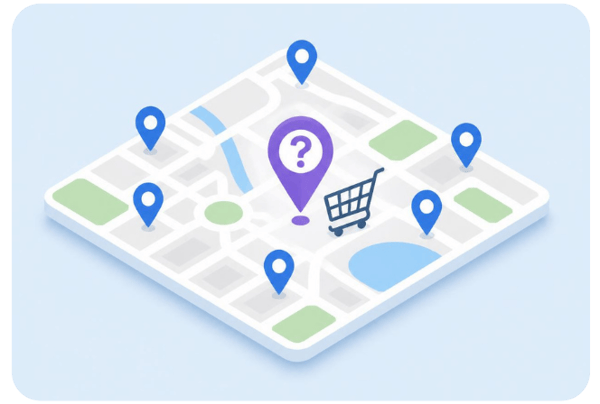
The instinct, when a brand notices dealers aren't converting the traffic they should, is to add a store locator - a footer widget, a separate "find a store" page, sometimes a third-party plugin. It looks like progress. It is rarely enough.
A locator that lives in the footer is answering a question the shopper is not asking at that moment. By the time someone has scrolled to the footer looking for a store finder, they have already decided the product page itself was not going to help them. And even the locators that make it onto the product page usually stop at "these dealers carry this brand" - not "this specific dealer, three miles away, has this exact variant in stock right now."
That gap has a name worth using, because it is easier to fix a problem once it has one: ghost demand. It is demand that existed, that the brand paid to create, and that never converted anywhere the brand can see it. Ghost demand does not look like a missed sale. It looks like nothing at all - which is precisely why so few brands have gone looking for it.
A few things ghost demand is not:
- It is not a traffic problem. The shopper already found the product.
- It is not a persuasion problem. The shopper had already decided to buy.
- It is not a pricing problem. They never got far enough to see a price at the dealer.
It is a discovery problem, at the exact moment discovery matters most.
What Closing the Gap Actually Looks Like
Closing it means answering the real question, in the place the shopper is actually asking it. That means live inventory, by SKU and variant, shown directly on the product page - not a separate store finder, not a static list, not a map that hasn't been checked against actual shelf stock since onboarding. The shopper should be able to see, at the moment they are ready to buy, exactly which nearby dealer has the product today.
This is the entry point Quivers builds for brands with a dealer network: a Dealer Inventory Locator that sits on the product page itself, pulling live stock per SKU and variant from connected dealers, with a clear path to complete the purchase from there. It is a one-line install, live in about twenty minutes, and dealer onboarding is handled as part of setup - which matters, because the value only exists once dealers are actually connected.
If your product pages are still answering "who carries this" instead of "who has this today," the ghost demand is already there. The only question is whether you can see it yet.
See how the Dealer Inventory Locator works → https://www.quivers.com/dealer-locator-with-inventory
Or read more: The Power of Proximity - Why Local Fulfillment is the Future of Retail
.png?width=352&name=CEO%20Corner%20-%20Quivers%20Universe%20Rebooted%20(1).png)